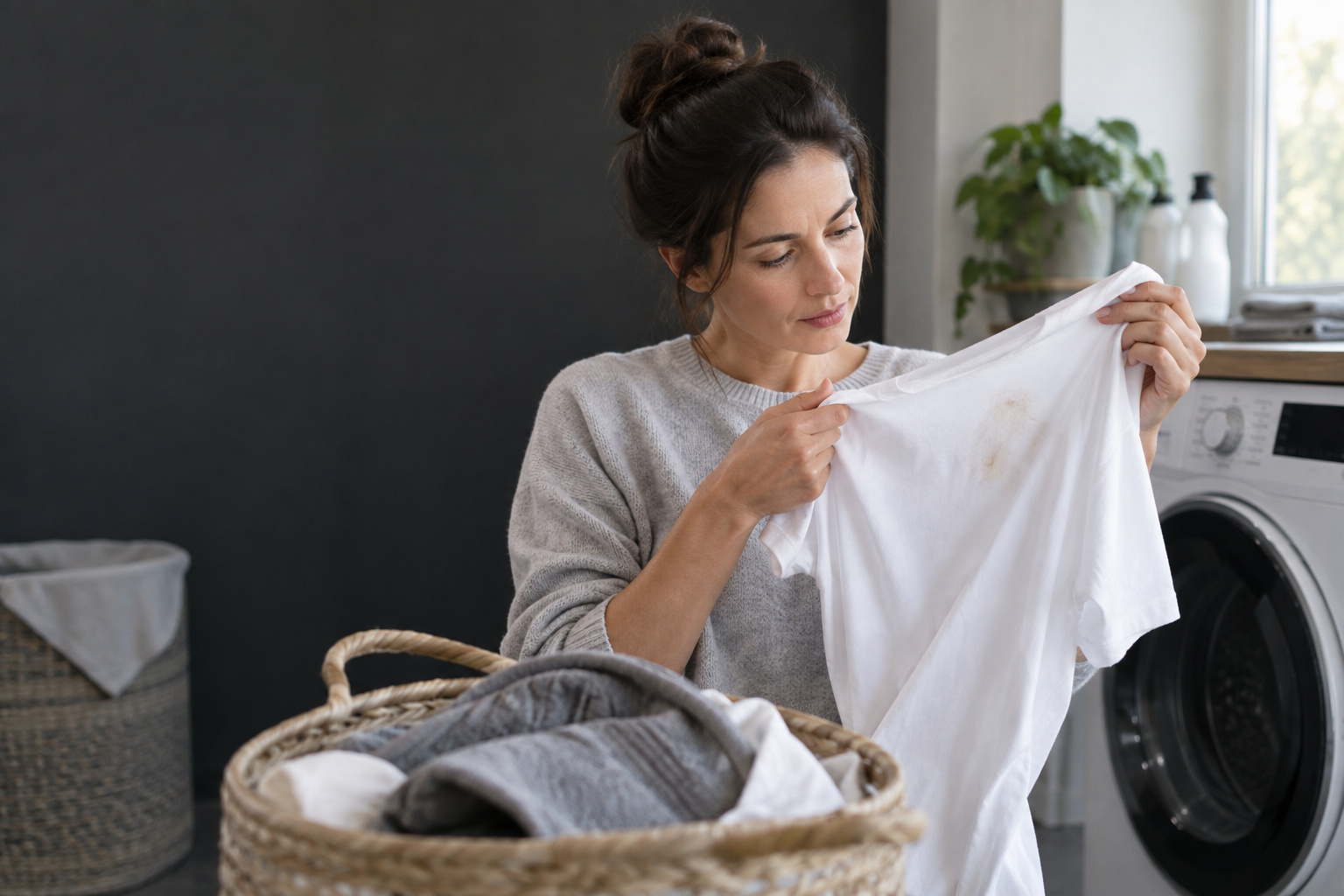
A fresh coffee or tea spill invites a quick reaction. The useful response is to identify the fabric and the drink before doing more than necessary. This guide is for washable textiles whose care instructions allow the proposed treatment. It does not promise that every brown mark will disappear, and it does not turn a washable cotton napkin into a model for silk upholstery or a lined jacket.
Identify the drink and protect the garment
Set the cup aside and note what was in it. Plain tea is a different starting description from coffee containing milk, cream, syrup, or a colored topping. If another person will wash the garment, tell them the ingredients and when the spill happened. Remove the garment before treating it, and keep the affected area separate from clean laundry so the wet spill does not transfer.
Read the care label first. The care-label checklist helps separate washing permission from permission to bleach, soak, or scrub. Read the proposed laundry product label and perform its required material spot test on a hidden area. If the item has professional-care instructions, an unstable print, or an unknown finish, pause rather than adapting a routine intended for ordinary washable clothing.
Start with the supported cool-water step
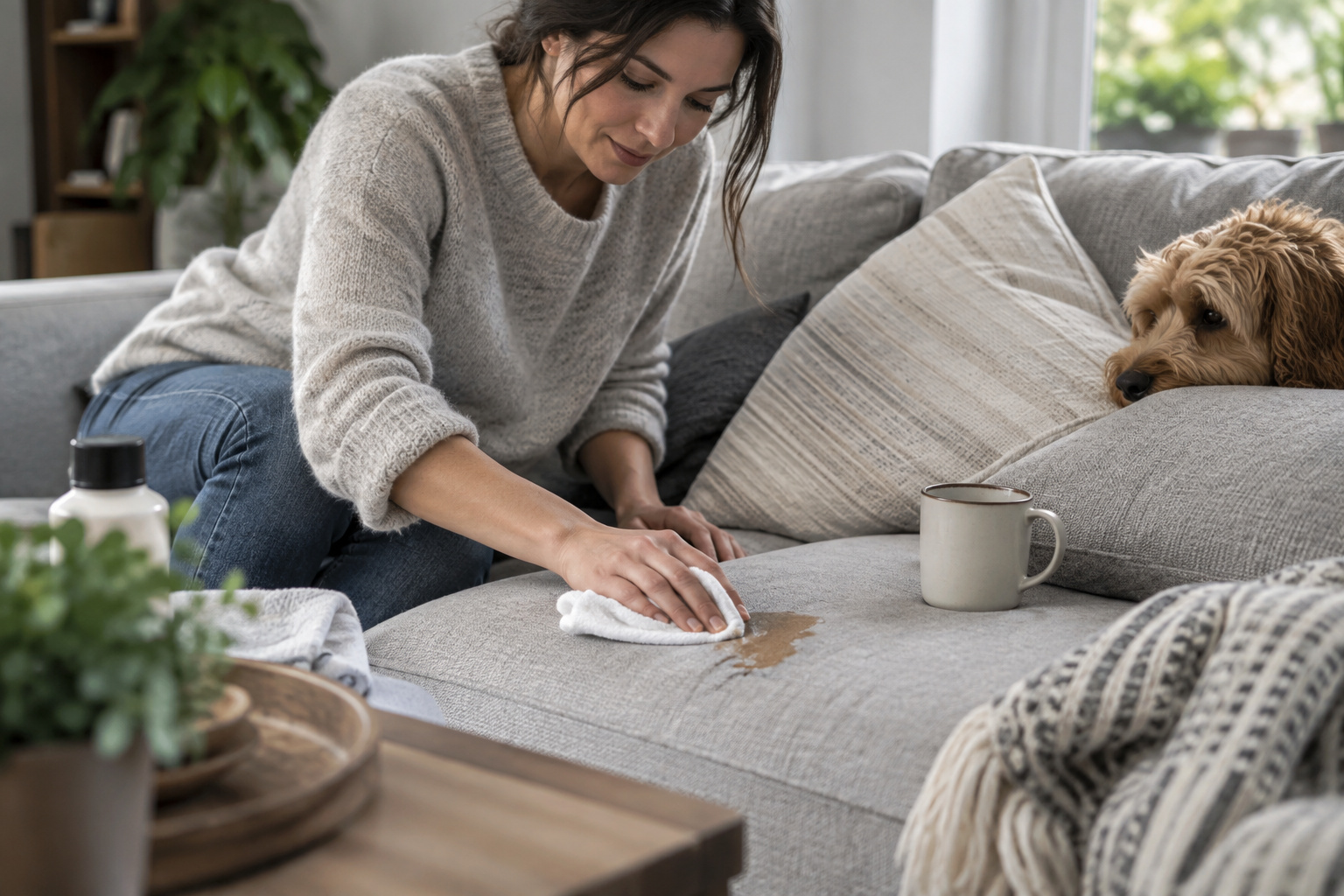
For coffee and tea, the American Cleaning Institute recommends sponging or soaking in cool water before pretreatment. Use that option only when the garment instructions permit water treatment. Work gently; vigorous rubbing is unnecessary as a first response and can make it harder to judge whether the mark or the fabric surface is changing. Use a clean white cloth if sponging, and keep the work area clean.
Do not substitute a hot kettle pour for this initial step. Do not assume that a long soak is better than a short, controlled treatment. The garment and laundry product instructions still govern the process. When soaking is not clearly permitted, seek a supported alternative rather than treating the absence of a warning as permission.
Choose one pretreatment that fits the label
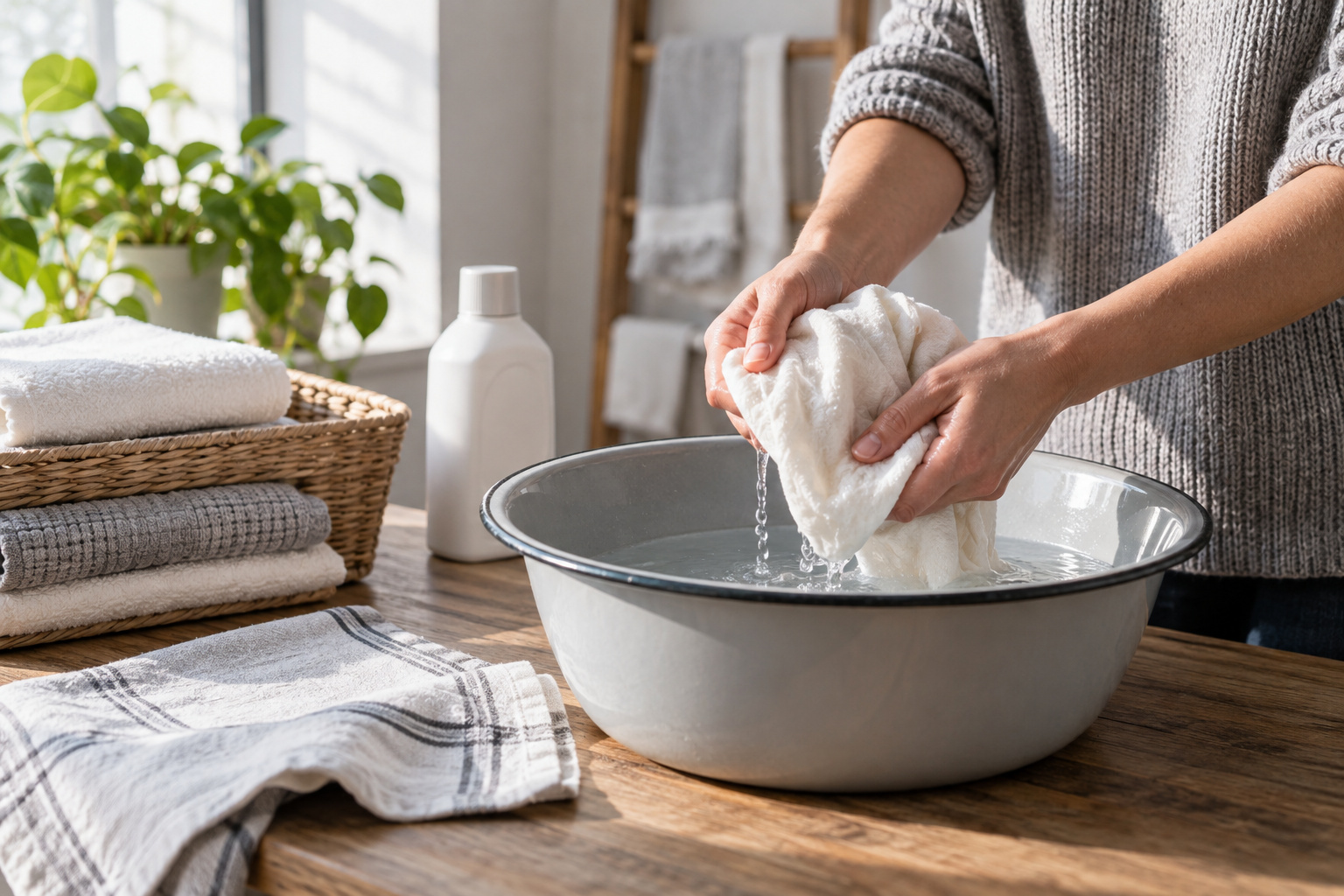
ACI lists prewash stain remover and liquid laundry detergent among the coffee and tea pretreatment options. That is a choice of routes, not a recipe for combining them. Select a product with directions appropriate to the garment and follow its stated application and contact time. More product and a longer dwell are not substitutes for evidence that the treatment is suitable.
Never mix cleaning products or build a household mixture from bleach, vinegar, peroxide, or other cleaners. The Washington Department of Health documents dangerous bleach reactions with other cleaners. Keep the process understandable: one permitted treatment, the required rinse or wash, and an inspection. If you need help interpreting a bleach claim on a laundry product, read the guide to oxygen and chlorine bleach exclusions before considering it.
Account for milk without inventing a recipe
A milky drink gives you more information to pass to a cleaner or manufacturer, but it does not justify layering several products. The ACI guide discusses enzyme-containing products for dairy stains. That can be a category to investigate if a milk-containing drink leaves a mark and your garment and product labels support its use. It is not a claim that every enzyme remover is suitable for every material.
Use the enzyme stain remover guide to check the match between the product's stated uses and your textile. Choose the instructions for the exact product in hand, including its exclusions and contact time. Avoid applying a generic soak duration borrowed from another formula. A stain-remover label is the practical instruction sheet; an ingredient category is only part of the selection.
Wash within the garment limits
Launder using the care label and the chosen product directions. Do not increase the water temperature simply because the mark is visible. If the treatment requires a wash that the garment cannot tolerate, that product is not an appropriate option for this item. Treat the whole finished garment as the constraint, including trims and decorations, rather than considering the stained fiber in isolation.
Check that the garment can move and rinse as intended in the selected cycle, and follow your appliance instructions. Avoid adding several laundry boosters in an attempt to insure the result. A simple, documented treatment makes the outcome easier to interpret. When helping someone else with their clothing, confirm that they have not already applied another cleaner before starting your own treatment.
Inspect the outline before using heat
The ACI advises against putting a stained item in the dryer until the stain is removed. After washing, examine the original spill area in good light. Look for the outer ring as well as the center. A mark that looks faint while wet may be easier to assess after permitted air drying. Follow the garment's drying instructions throughout; hanging is not suitable for every item.
If a trace remains, repeat only a treatment that the relevant instructions support. Stop if color transfers, the texture changes, or the mark no longer improves. Note the first treatment before choosing another. For a garment already washed and dried, use the set-in stain decision guide rather than assuming the fresh-spill sequence has the same prospects. A visible residual stain is preferable to irreversible fabric damage.