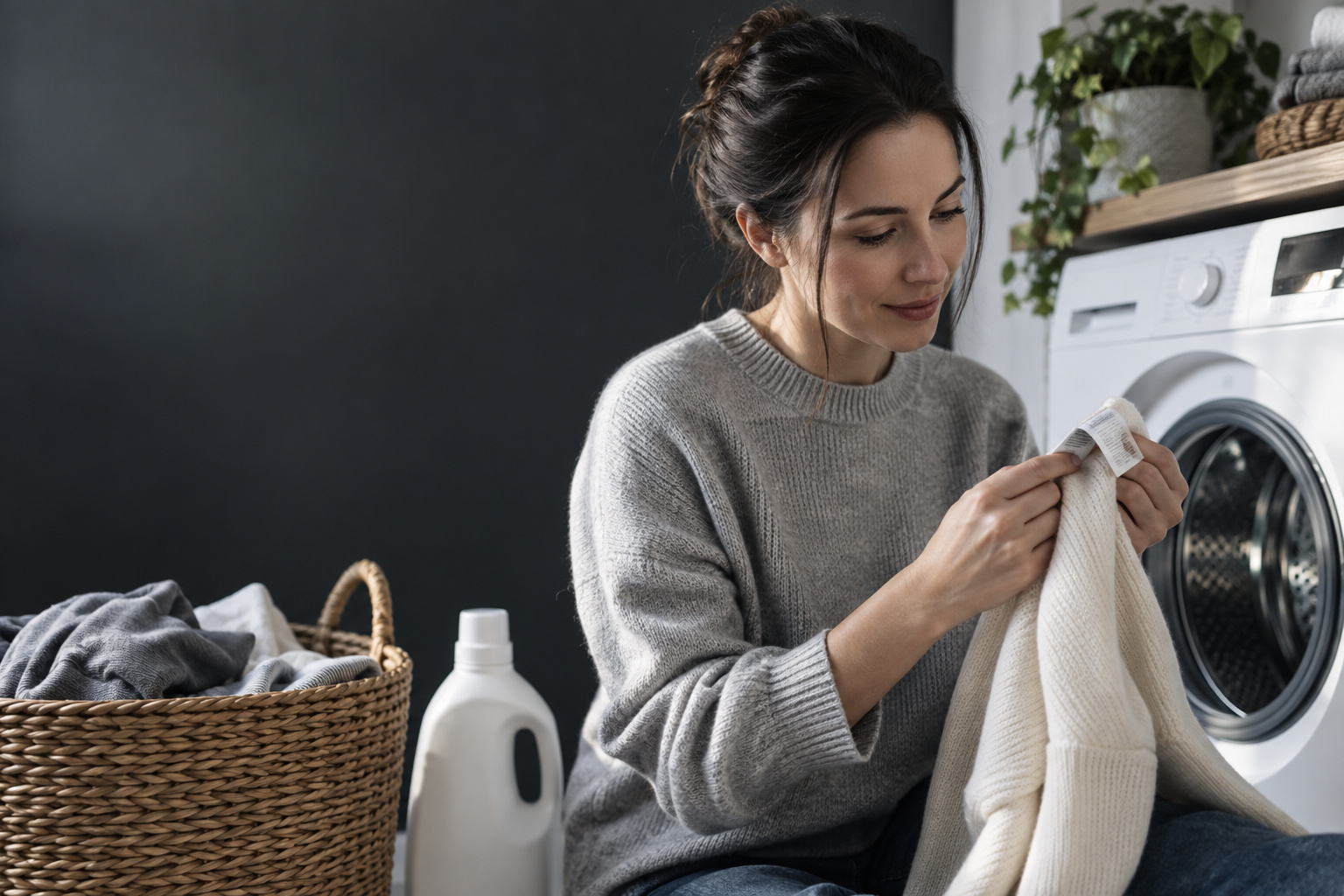
Choosing a bleach starts with deciding whether bleach is allowed at all. Oxygen and chlorine are useful category descriptions, but neither category establishes that a particular bottle is appropriate for a garment. Read exclusions before benefits. A stain-removal claim, a white shirt, or a color-safe phrase cannot replace the care instructions and the directions on the exact product you intend to use.
Start with permission, not with whiteness
Read the garment's bleach instructions along with its washing and drying requirements. If the label says do not bleach, that rules out oxygen bleach as well as chlorine bleach. Stop that branch of the decision. Do not overrule the restriction because the garment is white or because a stain is stubborn. If the label allows only a specific kind of bleach, use that restriction to narrow your search and then inspect the individual product label.
The FTC explains that care labels include instructions and warnings intended to prevent substantial harm during regular care. Our care-label guide helps turn those warnings into a practical checklist. If the label is unreadable or a symbol is unfamiliar, contact the garment manufacturer. Guessing about a small triangle is not a reliable basis for a chemical treatment.
Know what the category tells you and what it does not
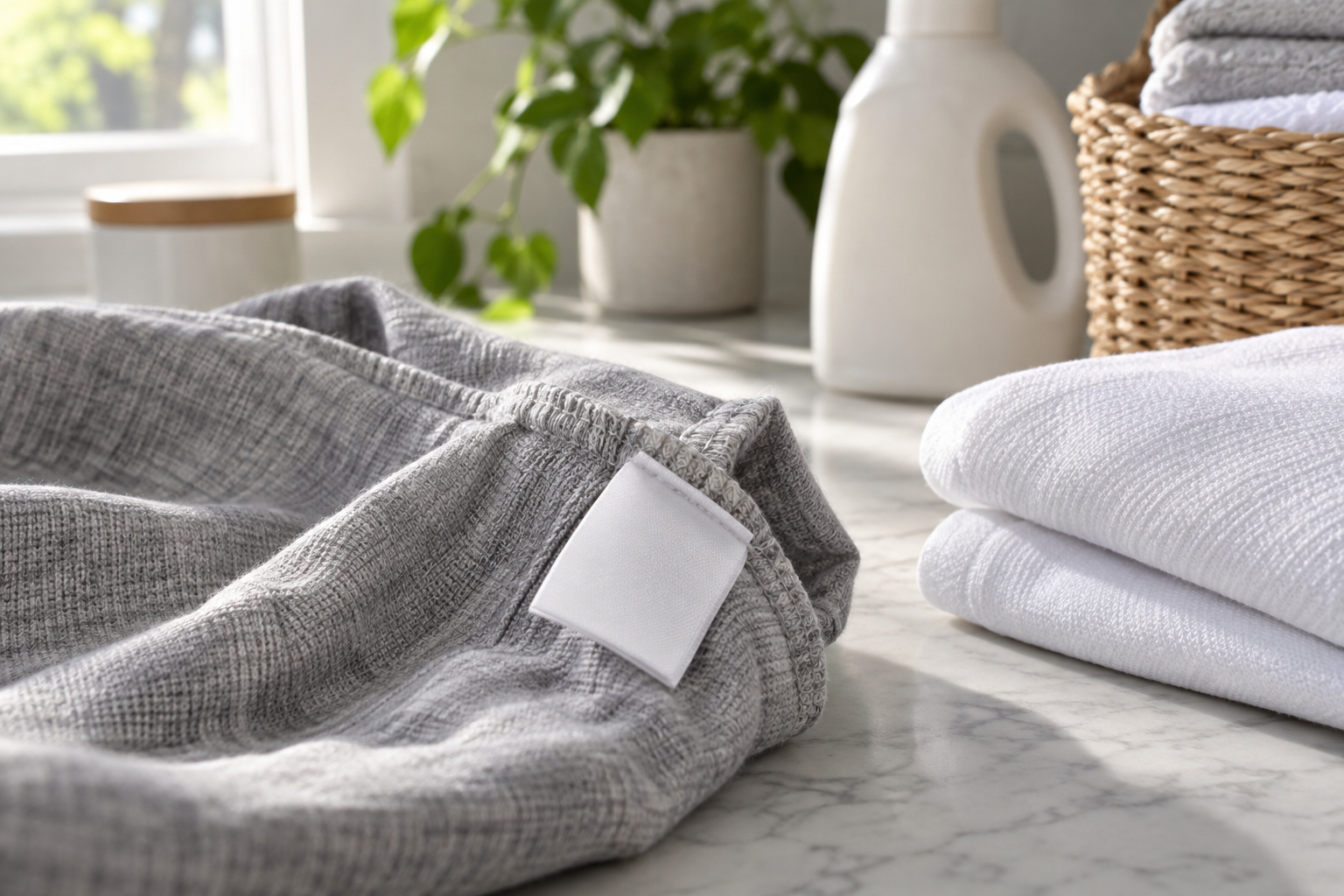
The Washington Department of Health identifies sodium hypochlorite as the active ingredient in chlorine bleach. That information helps recognize the category in product documentation. It does not establish a safe concentration, suitable textile, or appropriate application method for a particular bottle. Those details belong to the manufacturer's instructions and must match the garment's limits.
Oxygen bleach is also a category, not a universal compatibility certificate. Read the exact formula's exclusions and directions instead of assuming that non-chlorine means harmless to any fabric or finish. Do not transfer a scoop size, soak time, or temperature from one brand or format to another. A powder, liquid, and concentrated product can have different instructions even when shoppers place them in the same aisle.
Choose for the task without inventing a performance ranking
The ACI stain guide mentions bleach options subject to fabric safety for several persistent stains. That conditional language is central. The guide is not a head-to-head test of every product, and it does not justify claiming that one category is always stronger, gentler, faster, or more effective. Match a labeled use to the stain and garment rather than comparing unsupported scores.
Consider whether you need a targeted stain treatment or an additive allowed in a complete wash. These are different uses, and the same product may not support both. If a familiar food stain has not yet received a compatible pretreatment, the coffee and tea workflow illustrates a more focused decision process. Buying an additional chemical is not automatically the next useful step.
Never make a bleach mixture
Do not mix bleach with ammonia, acids, or other cleaning products. The Washington Department of Health describes hazardous gases and serious injuries from these combinations. Vinegar is an acid; being a household ingredient does not make it a safe bleach companion. The same source also warns that bleach reacts with hydrogen peroxide and other products. Do not combine oxygen and chlorine products or attempt a homemade booster blend.
Do not improvise a sequence that leaves unknown chemical residues together on fabric or in a basin. Follow only the labeled laundering use and the appliance instructions. If you cannot establish what someone previously applied, pause and obtain advice. Keep products in their original labeled containers so another person does not mistake a cleaner for a harmless liquid or apply the wrong instructions.
Treat the material test as a stop check
If both the garment and the product permit the intended use, follow the product's hidden-area testing directions before treating the visible stain. Select an inconspicuous area representative of the affected fabric, including the relevant color or finish where possible. A test on white lining does not establish suitability for a dark outer panel. Complete the instructed rinse and drying before judging the result.
Look for color transfer, fading, texture changes, and altered sheen. Stop after an adverse response. A successful small test does not guarantee that a large area, longer contact, or stronger concentration will behave the same way. Stay within the label directions throughout. If there is no suitable test area on an important garment, ask a professional cleaner or manufacturer instead of skipping the check.
Use a limited decision path for a stubborn mark
Write down the stain, allowed cleaning method, bleach restriction, candidate product, and relevant exclusion. If any part conflicts, remove that candidate. If the instructions fit, test as directed and perform only the supported treatment. Inspect after laundering before adding heat. The ACI advises against drying a garment while a stain remains, which preserves the chance to reassess the next step.
The set-in stains and drying guide helps distinguish a reasonable repeat from an escalating experiment. Stop if the fabric changes or repeated treatment no longer helps. Products shown in this category are references to investigate, not recommendations that every garment can tolerate them. Their presence in a catalog does not supply a missing compatibility claim, an independent performance result, or permission to disregard either label.