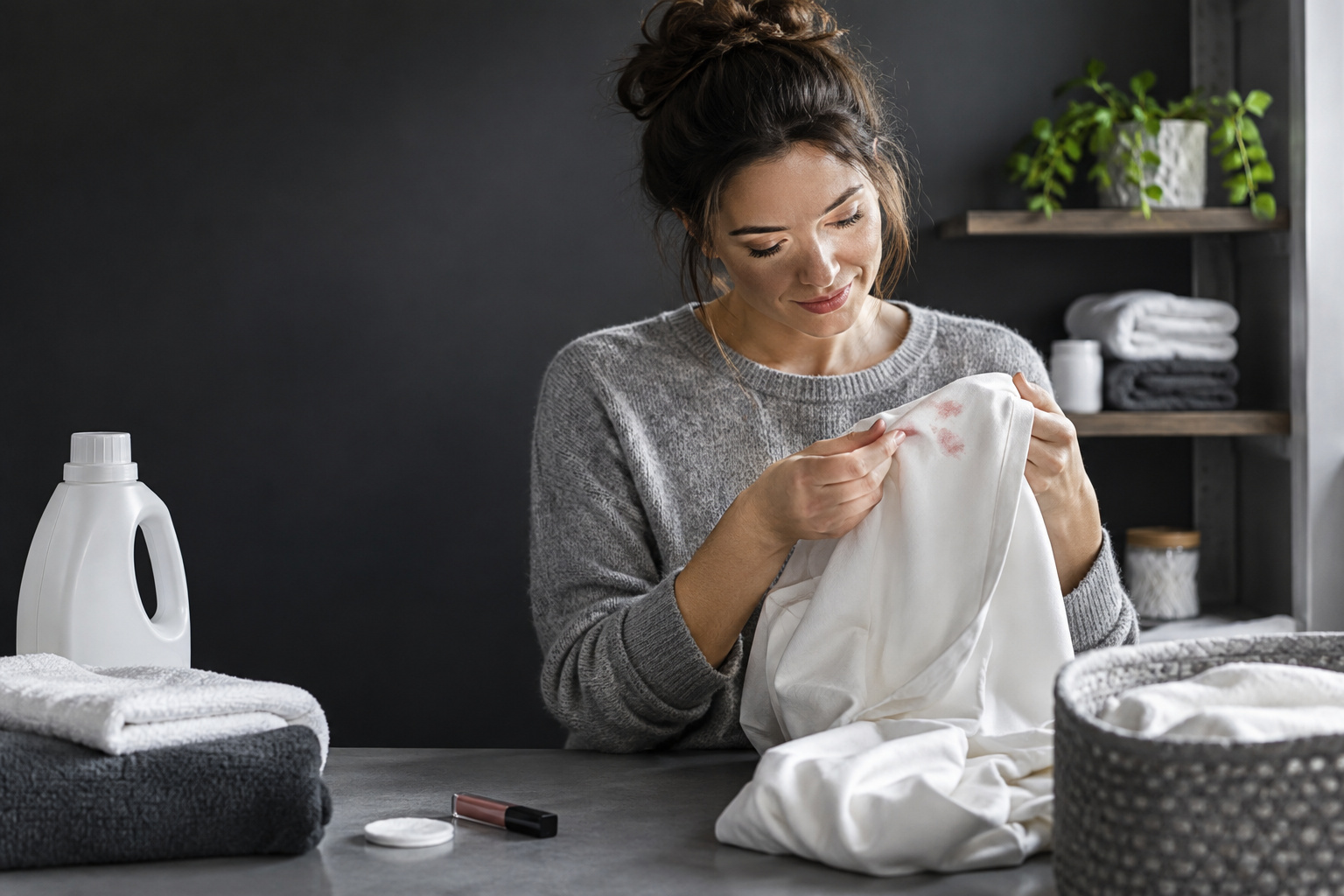
Ink and makeup are broad descriptions, not precise cleaning instructions. A ballpoint line, a marker spot, a powder transfer, and a lipstick smear may need different decisions. The safest useful first step is to identify the substance and the garment, then find a supported method for that combination. This guide deliberately stops short of a universal solvent recipe because compatibility cannot be inferred from the color of a stain.
Identify the product that made the mark
Keep the pen, marker, or cosmetic packaging if it is available. Record the product name and whether the mark is fresh, dried, or already treated. A cleaner may be able to use that information; a description such as black stain leaves too much uncertain. Do not test several cleaners merely to discover what dissolves the mark, especially on a valuable garment.
For loose powder or surface residue, avoid grinding it into the fabric while examining the area. Do not drag a lipstick smear across a wider patch. Remove the garment before considering treatment and protect nearby clean fabric from transfer. If the stain is on upholstery, leather, or another non-garment surface, use the maker's care instructions for that item rather than borrowing a laundry routine.
Decide whether home treatment is justified
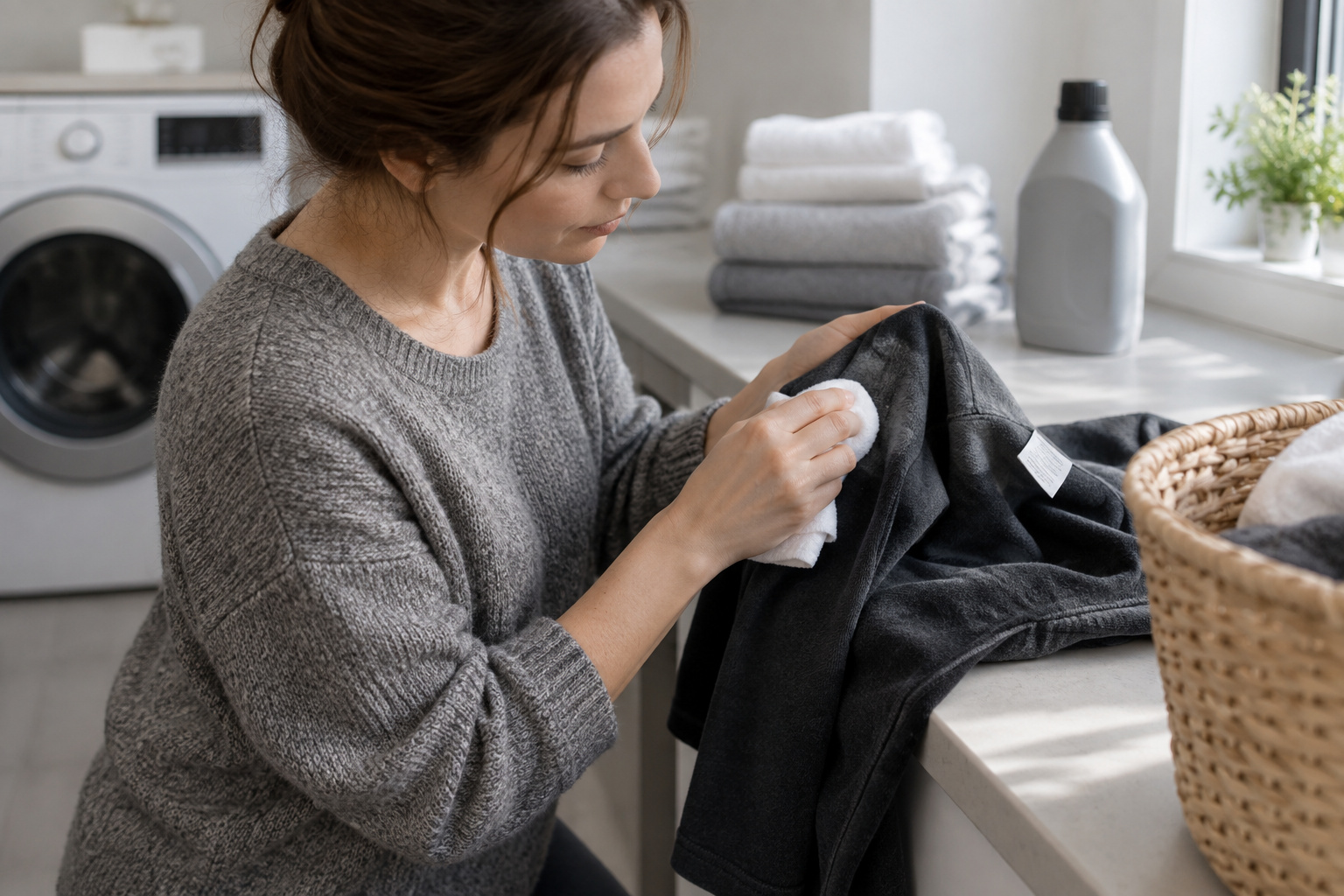
Read the care label and inspect the construction around the stain. A plain washable panel offers different possibilities from a lined collar, a decorative print, or an embellished cuff. Read the proposed product label and perform its material spot test on a representative hidden area. The care-label guide explains how to make that check meaningful rather than ceremonial.
The FTC care-label guidance concerns safe regular care and warnings about harmful procedures. A washing instruction is not blanket approval for alcohol, acetone, or other solvents. If the garment requires professional care, or the stain lies on a sensitive feature, use the delicates and professional-care guide and document the stain instead of beginning an experiment.

For ink, recognize the limits of a general stain guide
The ACI ink guidance notes that some ballpoint, felt-tip, and liquid inks may be impossible to remove. That limitation matters before anyone promises a spotless result. The same guide describes solvent-based methods, but those general suggestions do not establish that a particular solvent is safe for your textile, finish, workspace, or existing treatment residue.
For that reason, this guide does not provide a generic alcohol or solvent recipe. Look for manufacturer instructions that explicitly support the stained article and the treatment, or ask a professional cleaner. Do not use a household chemical simply because an online anecdote says it worked on another shirt. If the ink identity is unknown, the most useful action may be to preserve the information you have and stop before spreading it.
For makeup, investigate a labeled laundry pretreatment
For cosmetics and lipstick, the ACI lists prewash stain remover or laundry-detergent treatment before laundering. Treat those as possible routes for a compatible washable garment, not as interchangeable formulas. Select a product with relevant directions, check exclusions, and follow the exact application and contact time. A pigmented stain does not justify doubling the dose or extending contact overnight.
If a cosmetic includes an oily component, the grease and cooking-oil guide offers a useful way to organize the decision, but it is not evidence that a particular makeup formulation behaves like cooking oil. Keep the actual cosmetic identity in your notes. For a mixed stain, one clearly supported treatment is preferable to a succession of improvised products whose interactions and fabric effects are unknown.
Control transfer and avoid chemical escalation
Keep clean absorbent material and treated fabric separate from other clothing. Follow any backing, rinsing, or laundering instructions supplied by the selected product manufacturer. Stop if color spreads unexpectedly, garment dye transfers, or the surface changes. A spot test helps identify obvious problems, but it cannot promise complete compatibility or removal across a prominent stained area.
Never mix cleaning products or layer household remedies onto an unknown treatment. The Washington Department of Health warns that bleach can react dangerously with other cleaners. Bleach is not a default response to a colored mark, even on a pale garment. If you cannot confirm what was applied earlier, tell a professional cleaner rather than trying to neutralize it with a second chemical.
Judge the result without demanding a perfect rescue
Complete the permitted wash and inspect the mark before using dryer or iron heat. The ACI advises keeping stained garments out of the dryer until the stain is removed. Check the edges of the original mark and compare the fabric's color and sheen with an unaffected area. A faded spot can be an improvement; a newly pale patch can also signal garment damage.
Use the set-in stain guide if the item has already been dried or if a supported treatment leaves a trace. Stop when the material changes or progress ends. For an important garment, an early professional assessment can preserve options that repeated home trials remove. Bring the cosmetic or pen identity and the treatment history, and ask about likely outcomes without expecting a guarantee.